Low back pain affects an estimated 80 percent of adults at some point in their lives. In San Francisco, where active lifestyles intersect with long hours at desks, the combination of sitting-related deconditioning and weekend athletic demands creates a perfect environment for lumbar injuries. The single most protective factor against low back pain is not flexibility, not strength in isolation, but core stability.
At SF Custom Chiropractic, core stability training is a central part of how we help patients recover from and prevent low back injuries. But core stability is widely misunderstood, and the exercises most people think of when they hear “core work” are often the least effective for spinal protection.
Core Stability vs. Core Strength: The Critical Difference
Core strength is the ability of your abdominal and back muscles to generate force. Core stability is the ability of those muscles to control spinal position during movement and loading. The difference matters enormously.
A person can have strong abdominals, demonstrated by impressive sit-up numbers, yet poor core stability because those muscles do not activate quickly enough or in the right sequence to protect the spine during a sudden load. Picking up a suitcase, stumbling off a curb, or catching a heavy object all demand rapid, coordinated stabilization, not raw force.
The deep stabilizer muscles, including the transverse abdominis, multifidus, pelvic floor, and diaphragm, form the primary stability system. They create an internal pressure cylinder that supports the lumbar spine from all directions. When these muscles are functioning well, the spine stays neutral under load and the risk of disc herniation, facet irritation, and ligament strain drops dramatically.
A functional movement screening is the most reliable way to assess whether your core stability system is working correctly. It tests your ability to maintain spinal control during common movement patterns and identifies specific deficits that targeted training can address.
Why Crunches and Sit-Ups Are Not the Answer
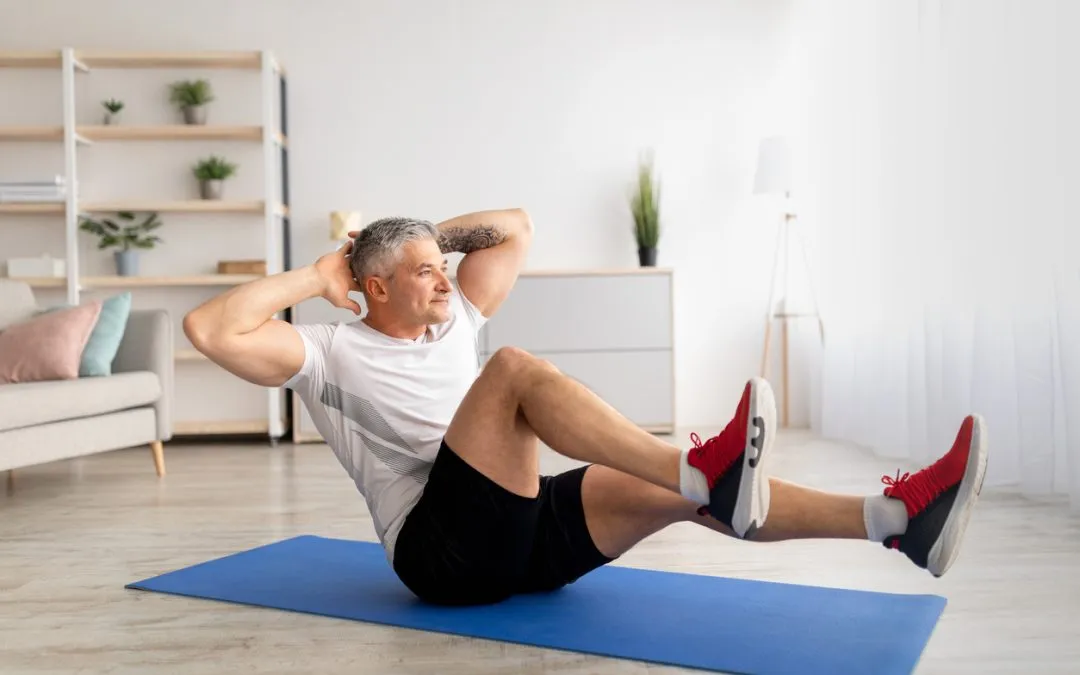
Traditional abdominal exercises like crunches and sit-ups train the rectus abdominis in a flexion pattern. This is the opposite of what the core needs to do during most real-world activities. The primary job of the core is to resist movement, not create it. It resists extension when you carry groceries, resists rotation when you swing a golf club, and resists lateral flexion when you carry a bag on one side.
Repeated spinal flexion under load, which is exactly what a sit-up is, has been shown in laboratory studies to accelerate disc degeneration. Stuart McGill’s research at the University of Waterloo demonstrated that the disc failure mechanism involves repeated flexion cycles, not compression alone.
Better choices include exercises that train anti-extension (planks, dead bugs), anti-rotation (Pallof presses, bird dogs), and anti-lateral flexion (suitcase carries, side planks). These exercises train the core to do what it actually needs to do: keep the spine stable while the limbs move and external forces act on the body.
A Simple Core Stability Program
An effective core stability program does not require a gym. The following four exercises, performed three times per week, provide comprehensive stabilization training.
Dead bugs train anti-extension and cross-body coordination. Lie on your back with arms reaching toward the ceiling and knees at 90 degrees. Slowly extend one arm overhead while extending the opposite leg, keeping your lower back pressed flat against the floor. Return and repeat on the other side. Three sets of eight per side.
Bird dogs train anti-rotation and anti-extension simultaneously. From a hands-and-knees position, extend one arm forward and the opposite leg back without letting the hips rotate or the lower back sag. Hold for five seconds, return, and switch sides. Three sets of eight per side.
Pallof presses train anti-rotation with a resistance band. Stand sideways to an anchor point with a band at chest height. Press the band straight out in front of your chest and resist the rotational pull. Hold for 10 seconds, return, and repeat. Three sets of eight per side.
Side planks train anti-lateral flexion. Hold for 20 to 30 seconds per side, keeping the body in a straight line from head to feet. Three sets per side.
Pairing Stability With Mobility
Core stability alone is not enough. A stable core that sits on a restricted pelvis or stiff thoracic spine still creates problems. Chiropractic adjustments restore the joint mobility that allows the core to function in its optimal range. When the lumbar, thoracic, and sacroiliac joints move freely, the stabilizer muscles can fire effectively and the entire system works as designed.
Build Your Foundation
Your core is the foundation of everything your body does. Invest in training it correctly, and low back pain becomes the exception rather than the expectation.
Call us at (415) 521-3073 or book your appointment online today.